
At Jenny Crissman’s acupuncture practice in Oakland, many patients seek a deeper understanding of how acupuncture supports the body. While acupuncture has been practiced for thousands of years, modern science continues to explore how this ancient therapy may influence the nervous system, connective tissue, circulation, inflammation, and the body’s natural ability to regulate itself.
One recent area of interest is the interstitium, a network of fluid-filled spaces found within connective tissue, under the skin, around organs, and between muscles. Researchers have started looking at this system as more than isolated pockets of tissue. Instead, it may act like a connected pathway where fluids, cells, and chemical signals move throughout the body.
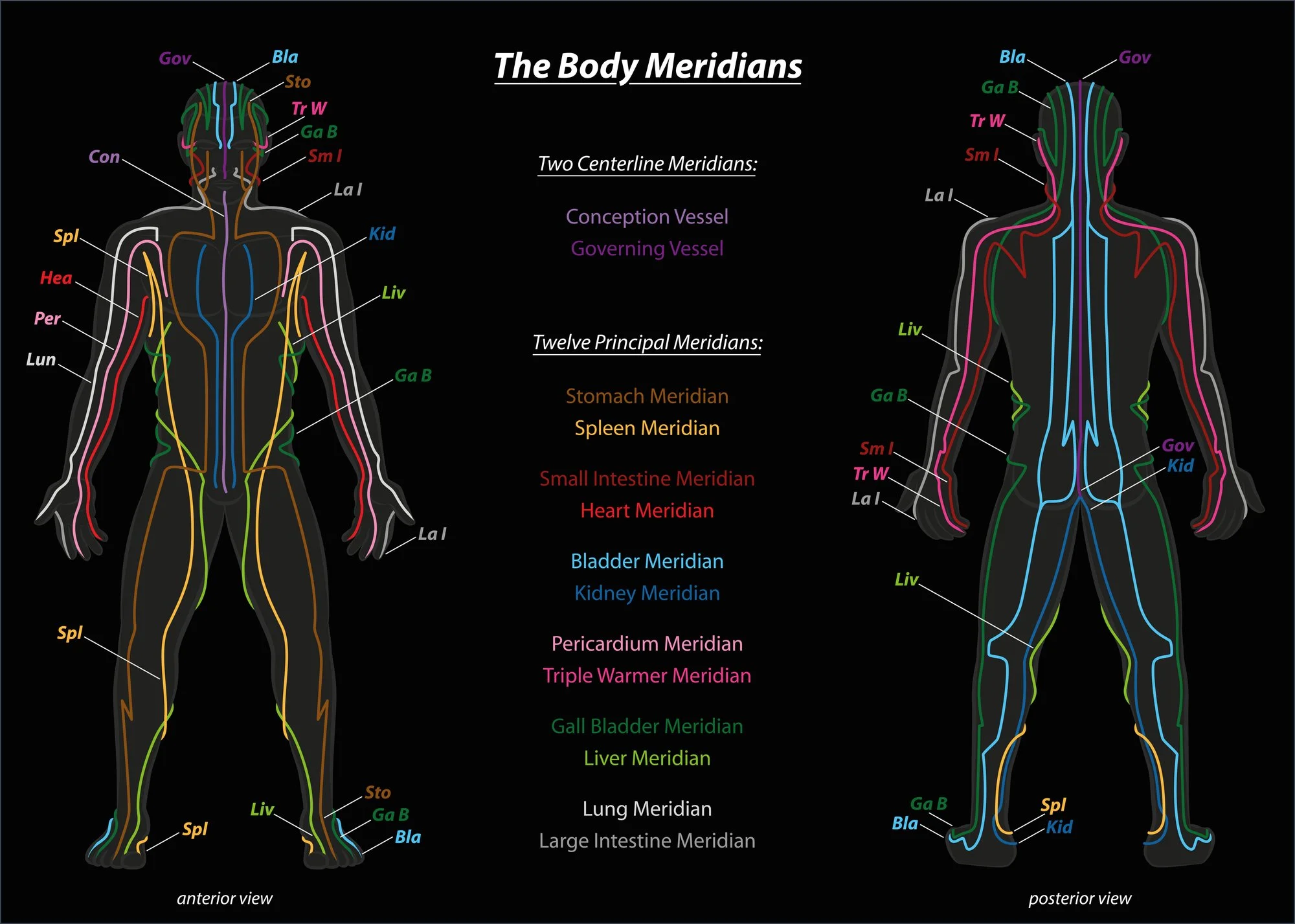
This idea is especially interesting for acupuncture because traditional Chinese medicine has long described the body as having channels of movement. These channels, often called meridians, are believed to carry energy and influence health. For centuries, this concept was difficult to explain through Western anatomy. But new research into fascia, connective tissue, and the interstitium may offer a possible bridge between ancient healing systems and modern biomedical science.
What Is the Interstitium?
The interstitium is made up of small spaces filled with fluid. These spaces are supported by collagen, a strong structural protein, and hyaluronic acid, a gel-like substance that helps hold water. Together, these components create a flexible internal environment that surrounds and supports many parts of the body. A simple way to imagine it is like a soft, hydrated web inside the body.
The collagen gives structure, while the fluid-filled spaces allow slow movement of liquid, immune cells, nutrients, and other molecules. This web exists under the skin, around muscles, near blood vessels, around nerves, and surrounding organs.
For many years, scientists knew that interstitial spaces existed, but they were often viewed as separate areas. More recent research suggests these spaces may be connected in a wider network. That matters because a connected interstitium could help explain how signals and substances move through the body outside the well-known blood and lymphatic systems.
Why This Discovery Matters
The body already has two major recognized transport systems: the cardiovascular system and the lymphatic system. The cardiovascular system moves blood through arteries, veins, and capillaries. The lymphatic system helps drain excess fluid, transport immune cells, and remove waste.
The interstitium may represent another important fluid pathway. It does not replace the cardiovascular or lymphatic systems, but it may work alongside them. Fluid may move through interstitial spaces before eventually entering the lymphatic or blood circulation.
This matters because many health concerns involve inflammation, fluid movement, immune activity, pain signaling, and tissue repair. If the interstitium is a connected system, it may play a role in how inflammation moves, how pain develops, and how healing happens.
For people in Oakland looking for a more whole-body approach to wellness, this research may help explain why acupuncture is often used to support balance rather than simply chase one symptom at a time. Acupuncture looks at how different systems of the body interact, and the interstitium gives modern science another way to study that connection.
How This Connects to Acupuncture
Acupuncture is a traditional therapy that uses very thin needles inserted into specific points on the body. It is commonly used to support pain relief, headaches, migraines, stress, sleep, digestion, sports recovery, and overall regulation.
From a traditional Chinese medicine perspective, acupuncture points are located along meridians. These meridians are thought to help regulate the flow of qi, often described as vital energy, along with blood and other body functions.
From a Western medical perspective, acupuncture has been studied for its effects on the nervous system, connective tissue, circulation, inflammation, and pain response. Still, some of its mechanisms remain difficult to fully explain.
The interstitium may offer one possible explanation.
Some researchers have found that acupuncture points often appear in areas rich in connective tissue, especially fascia between and around muscles. Fascia is the body’s connective tissue network. It wraps muscles, organs, nerves, and blood vessels. Because the interstitium exists within and around connective tissue, this raises an important question: could acupuncture points and meridians be connected to interstitial pathways?
The answer is not fully proven yet, but the research is promising.
Acupuncture Points and Connective Tissue
One important clue is that acupuncture points are often located where connective tissue planes meet. When a needle is inserted, it does not simply touch the skin. It may also affect the fascia and the fluid-filled spaces within connective tissue.
Needling can create small mechanical signals in the tissue. These signals may influence local cells, blood flow, nerve endings, immune activity, and chemical messengers. In simple terms, acupuncture may help “communicate” with the body through a network that includes nerves, fascia, fluid, and connective tissue.
This may help explain why acupuncture can sometimes have effects beyond the exact point where the needle is placed. A point on the wrist, for example, may influence nausea. A point on the leg may be used for digestion, stress, or pain. Traditional acupuncture explains this through meridian theory. Modern science may eventually explain part of it through the interstitium, fascia, and nervous system pathways.
At Jenny Crissman’s practice in Oakland, this whole-body view is central to how acupuncture is understood. The goal is not only to address discomfort, but also to support the body’s ability to regulate, recover, and function more smoothly.
Could Meridians Follow Interstitial Pathways?
Some studies have used dyes and tracers to observe movement through tissue after substances were injected into acupuncture points. In some cases, the tracers appeared to move along pathways that did not match veins or superficial skin structures. Instead, they seemed to move through deeper tissue spaces, including areas between muscles.
This does not prove that meridians and the interstitium are the same thing. That would be too strong of a claim. But it does suggest that traditional acupuncture maps may overlap with real anatomical pathways involving fascia and interstitial fluid.
That is a major reason this topic is exciting. For a long time, Western medicine struggled to identify a physical structure that matched the concept of meridians. The interstitium may not answer every question, but it gives researchers a new place to look.
What This Could Mean for Pain Relief
Acupuncture is widely used for pain, including neck pain, back pain, headaches, migraines, joint pain, sports injuries, and repetitive strain issues. Pain is not caused by one system alone. It can involve muscles, nerves, fascia, inflammation, circulation, emotional stress, and the brain’s interpretation of signals.
The interstitium may be relevant because it surrounds and connects many of these structures. If fluid movement, tissue tension, and inflammation affect pain signaling, then acupuncture’s interaction with connective tissue could be important.
When acupuncture needles stimulate specific points, they may influence local tissue tension, nerve activity, and chemical signaling. This may help reduce pain sensitivity, support circulation, and calm irritated tissue. It may also help regulate the nervous system, especially when pain has become chronic.
This is one reason acupuncture is often used as part of a broader care plan. It does not simply target one symptom. It may help the body shift out of a pain-stress cycle and return toward better regulation.
What This Could Mean for Whole-Body Wellness
The interstitium may also help researchers better understand how acupuncture supports whole-body wellness. Because connective tissue surrounds so many structures in the body, changes in one area may influence another area through mechanical, fluid, chemical, and neurological pathways.
This fits with the way acupuncture has traditionally been practiced. Rather than looking at the body as separate parts, acupuncture considers patterns. Sleep, digestion, stress, pain, energy, inflammation, and mood may all be connected. When one system is under stress, others may respond.
For patients in Oakland, this can be a helpful way to think about care. Acupuncture is not only about temporary relief. It is also about helping the body move toward better balance and resilience.
A Bridge Between Eastern and Western Medicine
One of the most important parts of this discussion is that it does not require choosing between traditional and modern explanations. Traditional Chinese medicine developed through observation over thousands of years. Western medicine relies heavily on anatomy, imaging, lab research, and controlled studies.
The interstitium may create a bridge between the two.
Traditional medicine described channels, flow, and whole-body connection long before microscopes could show fluid movement inside connective tissue. Modern science is now beginning to identify physical structures and pathways that may help explain some of those older ideas in biological terms.
That does not mean every traditional concept has been proven. It also does not mean acupuncture works only through the interstitium. Acupuncture likely works through multiple mechanisms, including the nervous system, immune signaling, hormones, connective tissue, circulation, and brain chemistry.
But the interstitium gives researchers a serious and testable framework. It allows scientists to ask better questions about how acupuncture points relate to fascia, how tissue fluids move, and how stimulation in one area may affect another part of the body.
Why More Research Is Needed
The discovery of an interconnected interstitium is still relatively new. Scientists are cautious because early findings need to be repeated, refined, and tested in different ways. The body is complex, and it would be irresponsible to claim that one discovery explains everything.
More research is needed to understand how interstitial fluid moves, how fast it moves, what substances it carries, and how it interacts with the lymphatic and cardiovascular systems. Researchers also need to study how acupuncture affects this tissue network in living patients.
Still, the early findings are meaningful. They suggest that the spaces between tissues may be more important than previously believed. They also suggest that therapies involving touch, movement, needling, pressure, and fascia may deserve deeper scientific attention.
The Bigger Picture
The interstitium changes how we think about the body. Instead of seeing organs, muscles, skin, and fascia as separate parts, it encourages us to see the body as an interconnected living system. This view fits well with acupuncture, which has always focused on relationships between different body areas and patterns of imbalance.
For patients, this can be encouraging. It means that symptoms such as pain, digestive issues, stress, inflammation, and sleep disruption may not always be isolated problems. They may reflect wider patterns in the nervous system, connective tissue, circulation, and immune response.
For practitioners, it offers a modern language to discuss why acupuncture may help support whole-body regulation. For researchers, it opens the door to new studies that could better explain acupuncture’s effects and improve how it is used in clinical care.
Acupuncture has been practiced for thousands of years, but modern science is still uncovering how it works. The discovery of the interstitium may be one of the most important developments in understanding the body’s hidden communication pathways.
This fluid-filled connective tissue network may help explain how signals move through the body, how inflammation spreads, how pain patterns develop, and how acupuncture points may connect with deeper anatomical structures.
Science is still developing, and more research is needed. But the connection between acupuncture, fascia, and the interstitium is a powerful area of study. It gives modern medicine a new way to understand an ancient practice, and it reminds us that the human body still holds discoveries waiting to be explored.
For those looking for acupuncture in Oakland, Jenny Crissman L.Ac. offers a thoughtful, whole-body approach rooted in traditional Chinese medicine and informed by modern understanding of the body. To learn more or schedule a visit, contact Jenny Crissman’s Oakland Integrative Healing Acupuncture practice today. Call 510-595-0700 today!